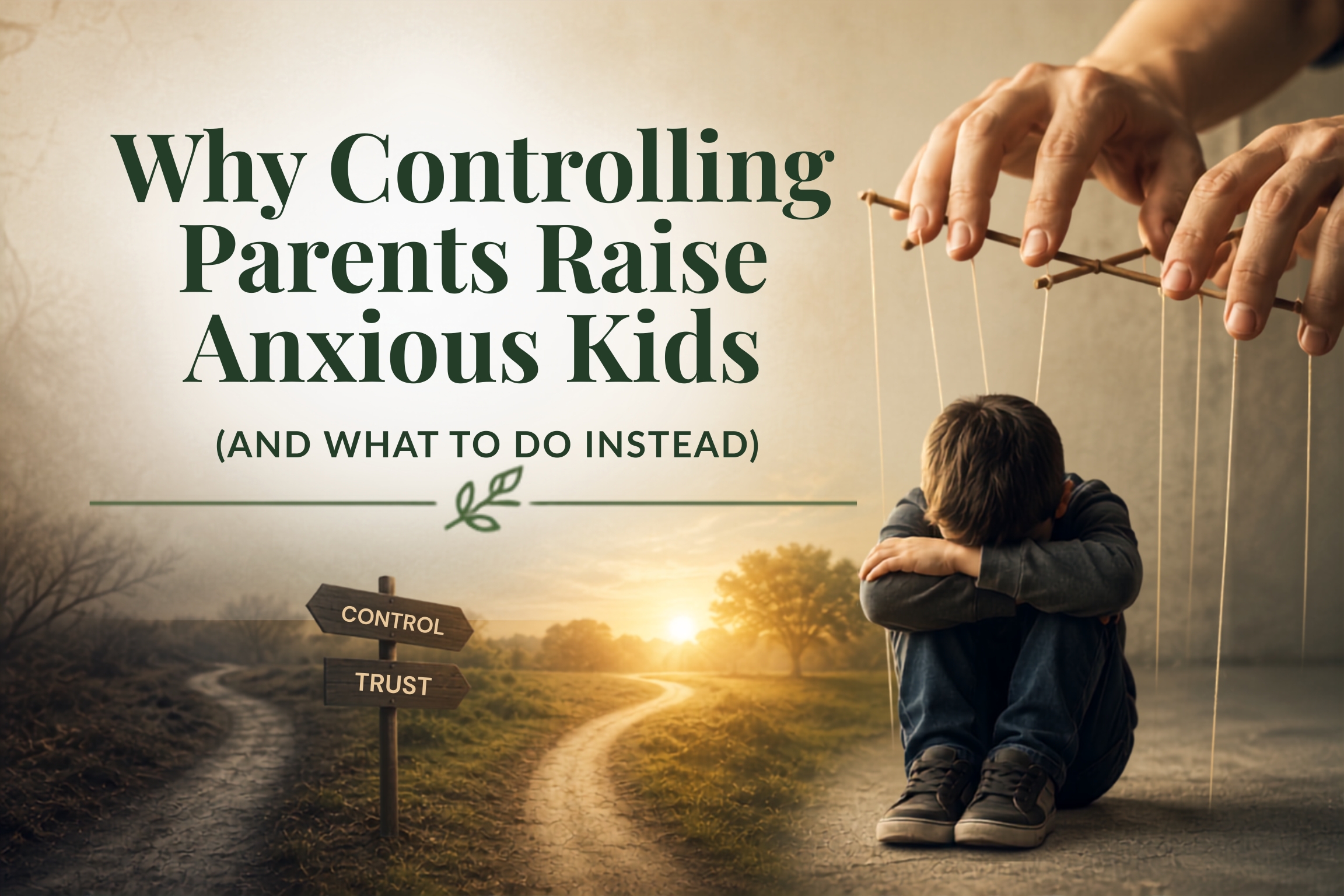
Most parents who hover, correct, and manage every detail of their child’s life aren’t trying to cause harm. They’re trying to prevent it. But research and real-world experience keep pointing to the same uncomfortable truth: the more tightly we control our children, the more anxious they tend to become.
If you’ve ever wondered why your child seems to freeze up when facing small decisions, or panics over mistakes that used to feel routine, the answer might not be about your child at all. It might be about how much room they’ve been given to think, choose, and fail on their own.
What “Controlling Parenting” Actually Looks Like
Controlling parenting rarely looks dramatic from the inside. It shows up in small, everyday moments:
- Redoing a child’s homework “corrections” before they turn it in
- Choosing their friends, hobbies, or schedule down to the hour
- Stepping in immediately when they struggle, before they can try to solve it themselves
- Reacting strongly to failure, even minor failure, as if it reflects on you
None of this comes from a bad place. It comes from love, and often from fear. But children absorb the underlying message whether we intend to send it or not: I don’t trust you to handle this.
The Link Between Control and Anxiety
Psychologists have studied this pattern for decades, and the pattern holds up: children raised with high control and low autonomy tend to report higher rates of anxiety, lower self-esteem, and more difficulty making independent decisions as they get older.
There’s a simple reason for this. Anxiety often comes from a mismatch between what a person expects of the world and what they’ve actually practiced handling. A child who has never been allowed to sit with discomfort, make a wrong call, or recover from a mistake has no internal evidence that they can. So when life inevitably hands them uncertainty, it feels catastrophic instead of manageable.
Control doesn’t just limit a child’s choices in the moment. It limits their belief in their own competence.
What to Do Instead
Stepping back from control doesn’t mean stepping back from parenting. It means shifting from managing your child’s life to guiding it.
1. Let small mistakes happen. Forgotten homework, a poorly chosen outfit and a lost allowance, These are low-stakes ways for kids to build the internal skill of recovering from setbacks before the stakes get higher.
2. Ask before you fix. When your child comes to you with a problem, resist the urge to solve it immediately. Try asking, “What do you think you should do?” before offering your own solution.
3. Separate your anxiety from theirs. Notice when you’re stepping in because your child actually needs help, versus stepping in because you feel uncomfortable watching them struggle. These are two very different things.
4. Give choices with real weight. Letting a child choose between two shirts isn’t the same as letting them choose how to spend a Saturday or handle a disagreement with a friend. Look for opportunities to hand over decisions that matter.
5. Model how to handle uncertainty. Kids learn more from watching how you handle your own mistakes and setbacks than from anything you tell them directly.
The Bigger Shift: From Ownership to Guidance
This is really a question about the story we tell ourselves as parents. Do we see our children as projects to manage and perfect, or as people to guide toward becoming themselves?
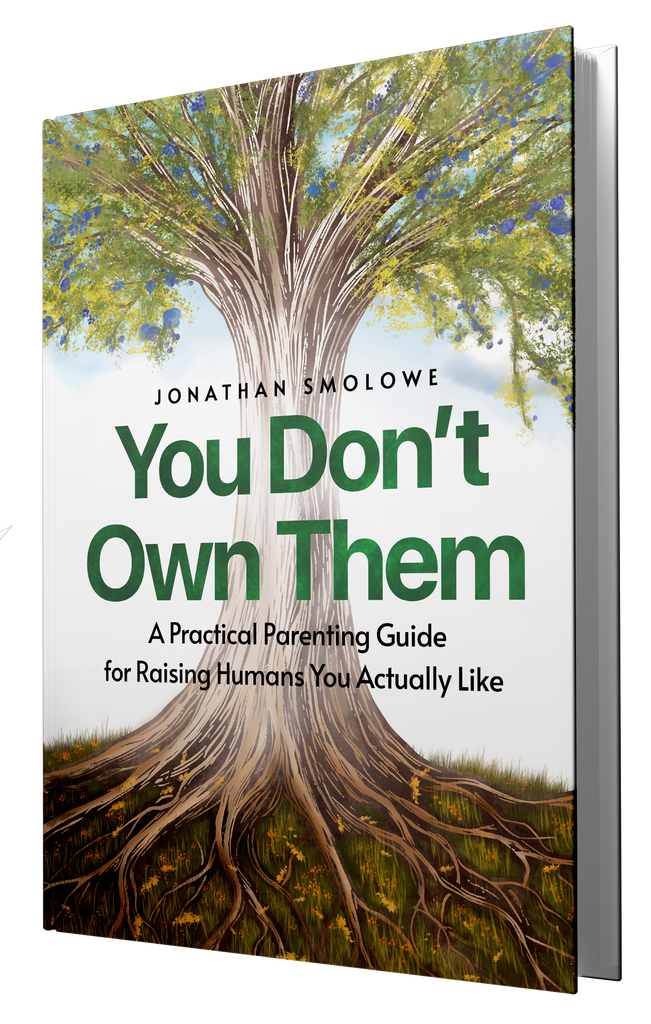
That distinction is at the heart of Jonathan Smolowe’s book, You Don’t Own Them, which explores exactly this tension: the difference between parenting from control and parenting from trust. Smolowe, a father of three adult children, doesn’t approach this as a psychologist with a theory to prove. He writes as a parent who has made the mistakes, watched the outcomes, and come out the other side with a clearer sense of what actually helps.
The core idea is simple but not easy: children aren’t extensions of us. They’re separate people, on their own timeline, figuring out their own lives. Our job isn’t to prevent every misstep. It’s to be present enough that they know they can come to us when one happens.
Where to Start
If you recognize some of these patterns in your own parenting, you’re not alone, and it’s not too late to shift course. Start small: pick one area this week where you typically step in, and practice stepping back instead. Watch what your child does with the space.
For a deeper look at how to make that shift without losing connection with your kids, explore You Don’t Own Them or read a free chapter to see if the approach resonates with your own parenting journey.