
“Just set boundaries.” It’s the most common piece of parenting advice out there and one of the most misunderstood. Somewhere between “let kids be kids” and “control every outcome,” a lot of parents lose track of what a boundary actually is.
Here’s the distinction that matters: a boundary is something you hold. Control is something you try to impose on someone else. Confusing the two is where a lot of parent-child conflict quietly begins.
The Difference Between a Boundary and Control
A boundary sounds like: “I’m not willing to drive you anywhere after 10 p.m. on a school night.” It’s a limit on your own behavior, clearly stated, and it doesn’t require your child to agree with it.
Control sounds like: “You’re not allowed to go out after 10 p.m., and if you try, here’s what will happen.” It’s an attempt to manage your child’s behavior directly, often backed by threat or punishment.
Both can achieve the same practical result. But they land completely differently. Boundaries respect a child’s autonomy while protecting your own limits. Control treats a child’s autonomy as something to override.
Why This Distinction Matters More As Kids Get Older
With a toddler, control and boundaries often look similar because young children genuinely need more direct guidance. But as children grow into teenagers and young adults, the strategy that used to work starts to backfire. Teens who are managed rather than guided tend to respond in one of two ways: they rebel harder, or they comply outwardly while quietly disengaging from the relationship.
Neither outcome is what most parents actually want. Most parents want their kids to make good choices because they trust the relationship, not because they’re afraid of the consequences.
Four Boundaries That Build Trust Instead of Resentment
1. “I’ll answer your calls, but I won’t track your location.” This tells your child you’re available and invested, without treating them as someone who needs to be monitored.
2. “I’m happy to talk about this when we’re both calm.” This is a boundary on how you’ll engage, not a demand about how your child should feel or behave.
3. “I won’t cover for missed responsibilities, but I will help you plan ahead of time.” This separates support from rescue, you’re still present, but you’re not absorbing consequences that belong to them.
4. “This is my house rule, and I’m open to hearing your case for an exception.” This keeps the decision with you while leaving room for your child to be heard, which is often what they’re actually asking for.
How to Hold a Boundary Without a Power Struggle
The hardest part of boundaries isn’t setting them, it’s holding them calmly when they’re tested. A few things help:
- State it once, clearly, without over-explaining. Long justifications often read as an invitation to negotiate.
- Expect pushback, and don’t take it personally. Testing a boundary is often just a child checking whether it’s real.
- Follow through quietly. The boundary should hold because you said it would, not because you got louder.
- Revisit boundaries as your child grows. A boundary that made sense at age 10 may need to change at age 16.
The Bigger Picture: Guiding, Not Owning
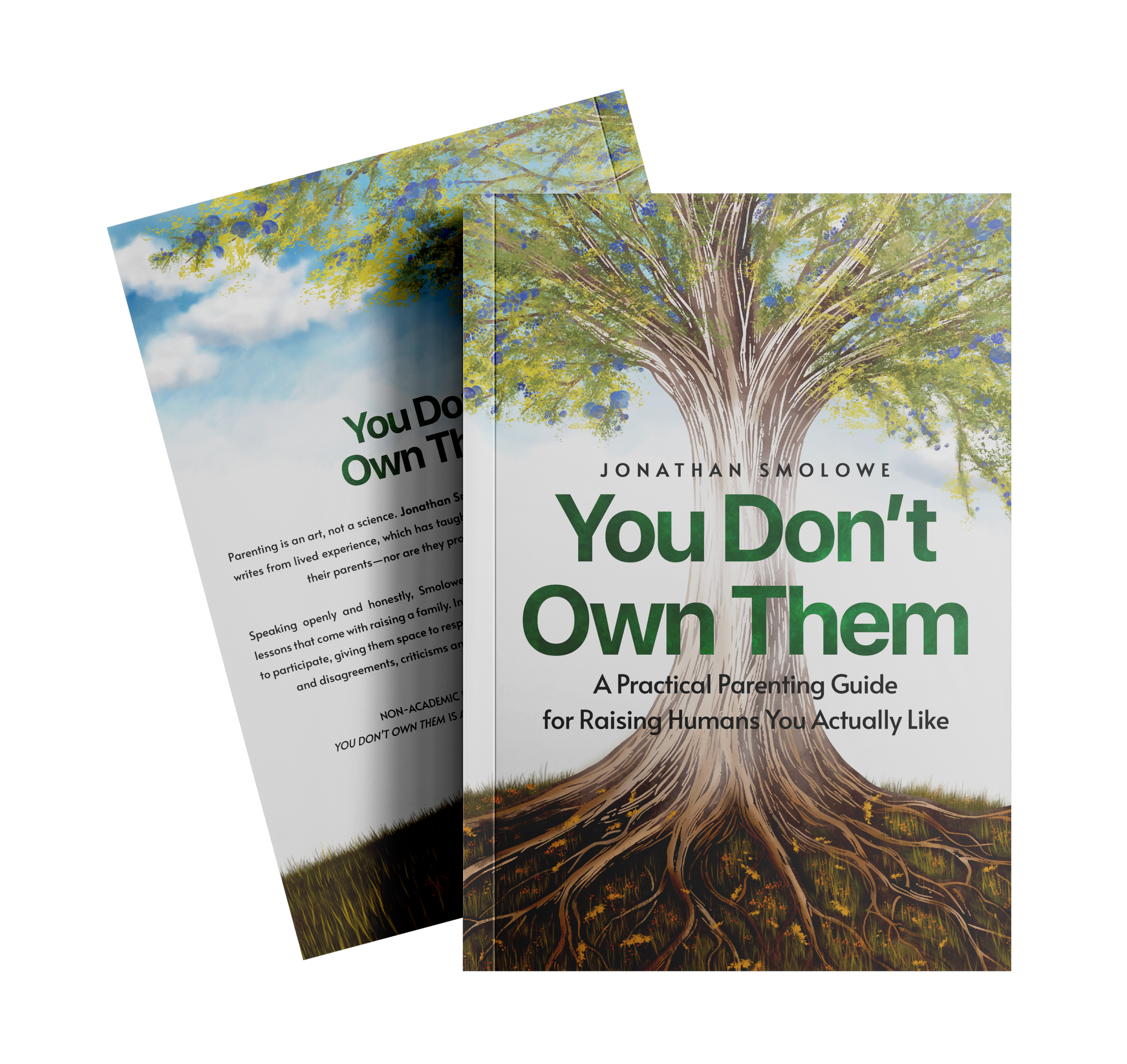
This is really the heart of what Jonathan Smolowe writes about in You Don’t Own Them. Boundaries rooted in control come from a belief, even an unconscious one, that our children’s choices are ours to manage. Boundaries rooted in trust come from a different belief: that our job is to guide, not to own.
Smolowe writes from the perspective of a father who has lived through the messy, imperfect version of this — not a theory, but twenty-plus years of trial, error, and course-correction with his own three children. The book doesn’t offer a rulebook. It offers a way of thinking about the choices behind the rules.
Try This This Week
Pick one rule in your house that you enforce mostly through pressure or threat, and try restating it as a boundary you hold instead. Notice how the conversation changes.
If this way of thinking about parenting resonates, read a free chapter of You Don’t Own Them or explore the full book here.